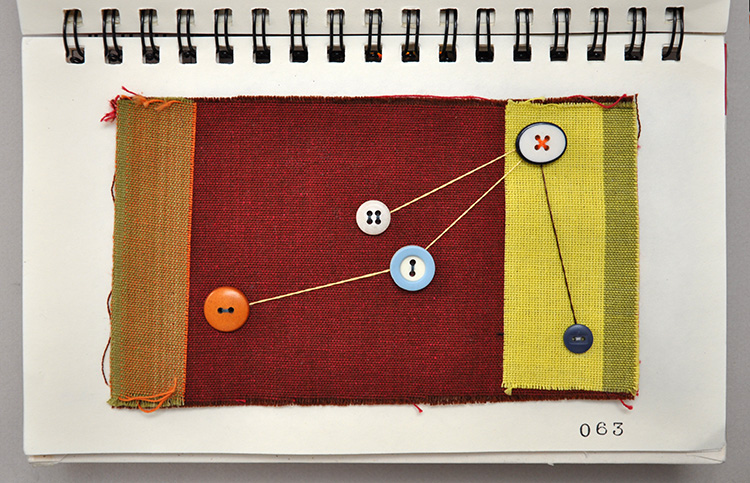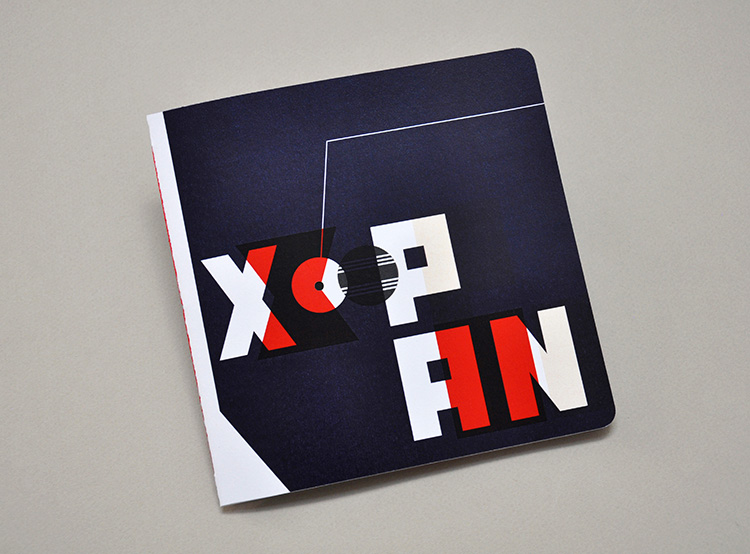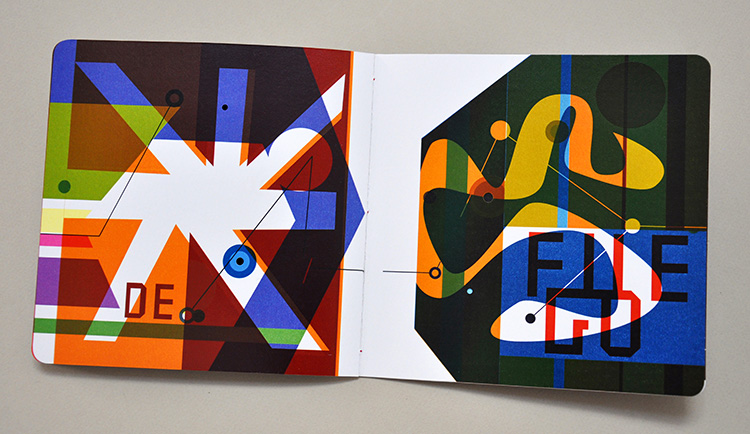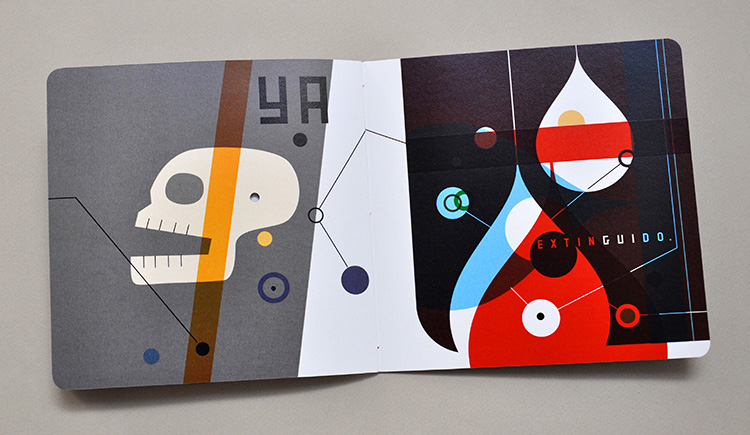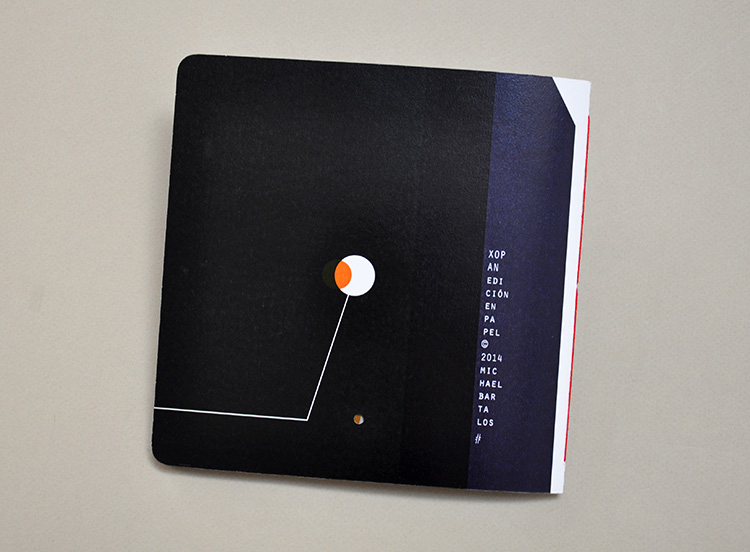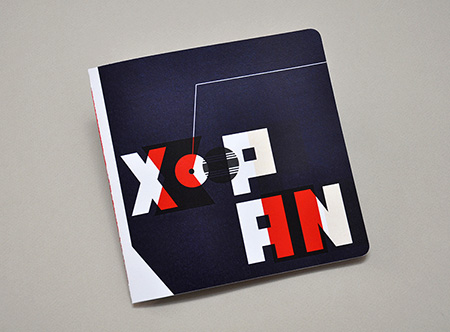
XOPAN is an artist’s book inspired by my stay in Mexico this past summer. It exists in two forms: as a recently-completed paper edition (shown here) and as a hand-sewn fabric edition (currently in production). Both versions reference the ancient Aztecs of Mexico and their celestial observations, beliefs, and notions of time.
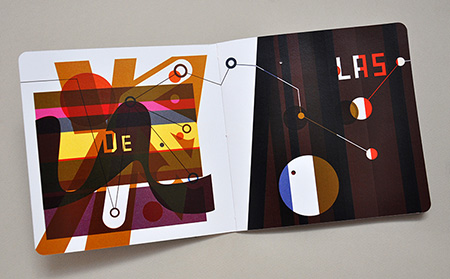
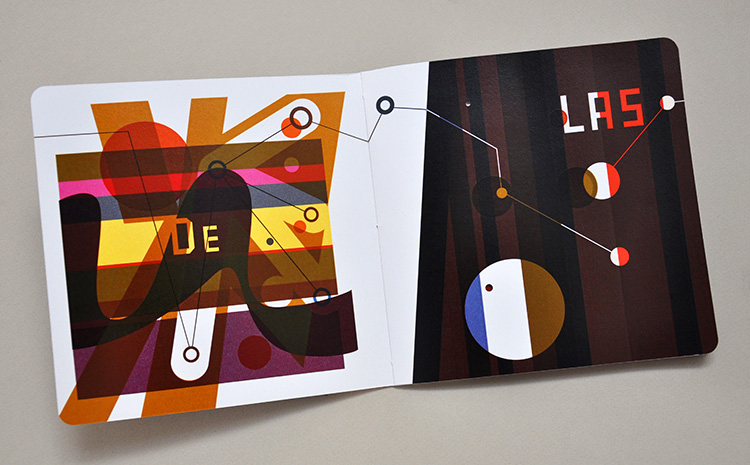
The Aztec calendar had two different systems of keeping track of time. One was the 260-day Tonalpohualli by which sacred and divinatory occasions were determined and the other was the 365-day Xiuhpohualli by which civil, agricultural and ceremonial events took place. In this book, the idea of ‘layered time’ is suggested by overprinted images on each page.
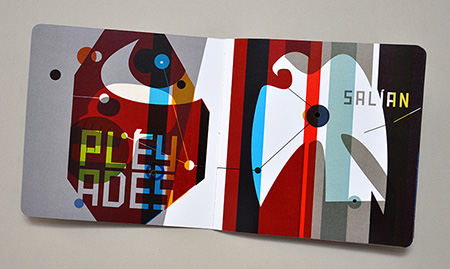
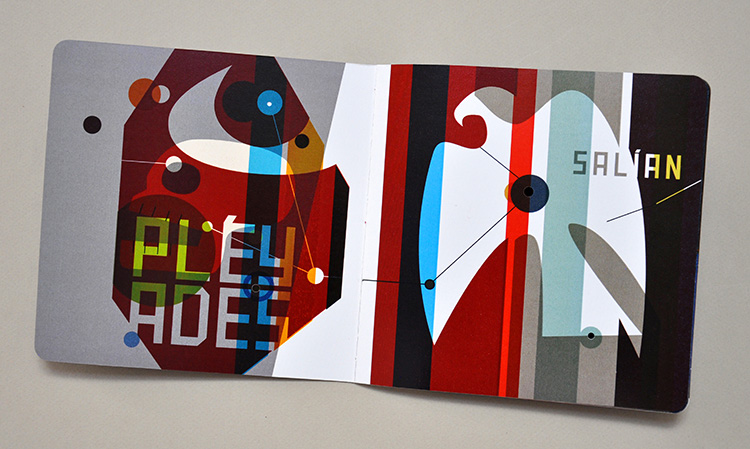
The Xiuhpohualli system was based on the perceived movement of the Pleiades star cluster, a conspicuous feature of the night sky that passed directly over the Aztec community. Its points of light appear throughout the book as perforated holes of various sizes.
In the Aztec calendar, fifty-two years comprised a full cycle, marked by a New Fire ceremony ensuring continued movement of the cosmos and re-birth of the sun. On these occasions, human sacrifices were made to prevent the demons of darkness from descending to Earth and devouring mankind, whereupon newly-lit fires throughout the region ushered in the next fifty-two year period.
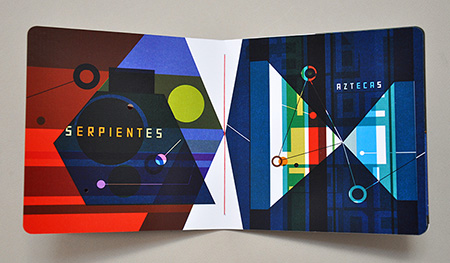
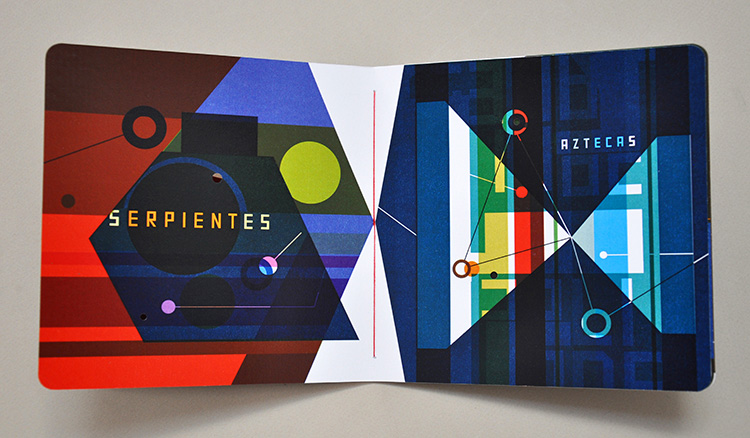
In Aztec mythology, the celestial snake Xiuhcoatl was considered the spirit form of the fire god. The serpent was believed to have sprung from the Pleiades, which my book’s text — originally written as a haiku in English — alludes to:
From the Pleiades / stream Aztec serpents of fire / long since extinguished.
In the book this appears as:
De las Pléyades / salían serpientes Aztecas de fuego / ya extinguido.
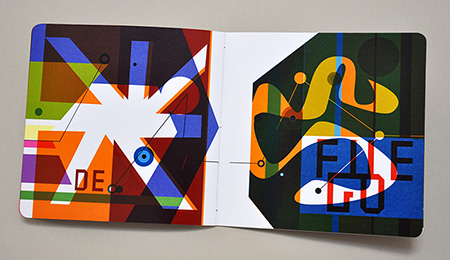
My book’s title XOPAN is the Nahuatl word for the time of year that marks the sun’s highest points in the sky and presence of the rainy season — typically from spring through fall. In Aztec cosmology this period was symbolically associated with the night, moon, Venus and the Pleiades. The Xopan Cueponilistle, or Annual Renewal Ceremonies, are still observed by some in springtime today.
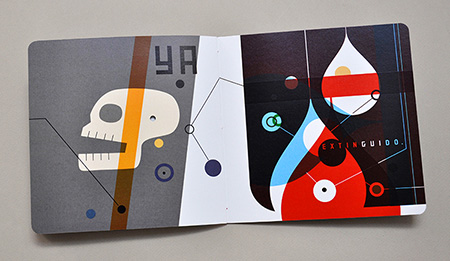
Other important elements of Aztec culture in the book include the eagle that fulfilled a prophecy indicating where the Mexica people (who would become part of the Aztec Empire) should establish their new home, Tenochtitlan. Another is Teotihuacan, of mysterious origins, known to Aztecs as the “place where gods were born.” Yet another is the skull, a powerful symbol of death as well as a positive representation of rebirth and the afterlife.
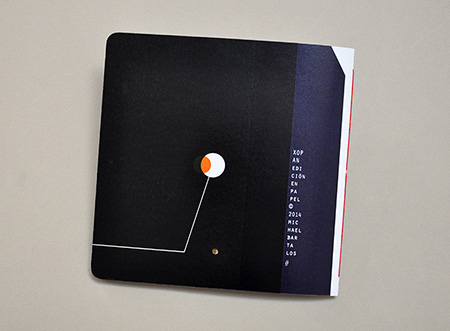
The paper edition of XOPAN was designed in Illustrator CC and printed by running each page through a Canon Image Runner Advance laser printer multiple times to achieve densely overprinted layers. It was output on Accent Opaque 100# Cover, bound with red 100% pearl cotton hand embroidery thread, and issued in an edition of 24 numbered and signed copies.
The book is being shown in the Pulp Atlas exhibition series, the next one opening at Needles and Pens in San Francisco on November 13.